Yes, you can sometimes replace one brake caliper when the opposite caliper is working correctly and the vehicle manufacturer’s service guidance allows it. For Lemont drivers comparing a one-caliper repair with a recommendation for both sides, the deciding factors are the inspection findings and the procedure for that vehicle.
Both sides of the affected axle need inspection before that decision. A second caliper that also binds, leaks or has significant damage needs attention too. Pads, rotors, slides and hoses require their own assessment, so replacing one caliper does not necessarily mean the entire repair stays on one wheel.
Do brake calipers need replacing in pairs?
Pair replacement is a common recommendation, but it should come with an explanation. PowerStop, a U.S. brake manufacturer, recommends replacing calipers in front or rear pairs, citing similar exposure and braking consistency. It also says replacement should follow the vehicle manufacturer’s specifications. The condition of the parts on your vehicle still matters. PowerStop’s caliper guidance
Here, a pair means the left and right calipers on the same axle. A recommendation for both front calipers does not, by itself, establish a need for rear calipers.
Ask whether the second caliper has a confirmed defect, whether the applicable service information calls for pair replacement, or whether replacement is being recommended preventively. Those are different reasons for including the same part on an estimate.
A useful recommendation identifies which reason applies. Shared age is relevant context, but the opposite caliper still needs examination rather than an assumption that it has already failed.
What needs checking on the opposite side?
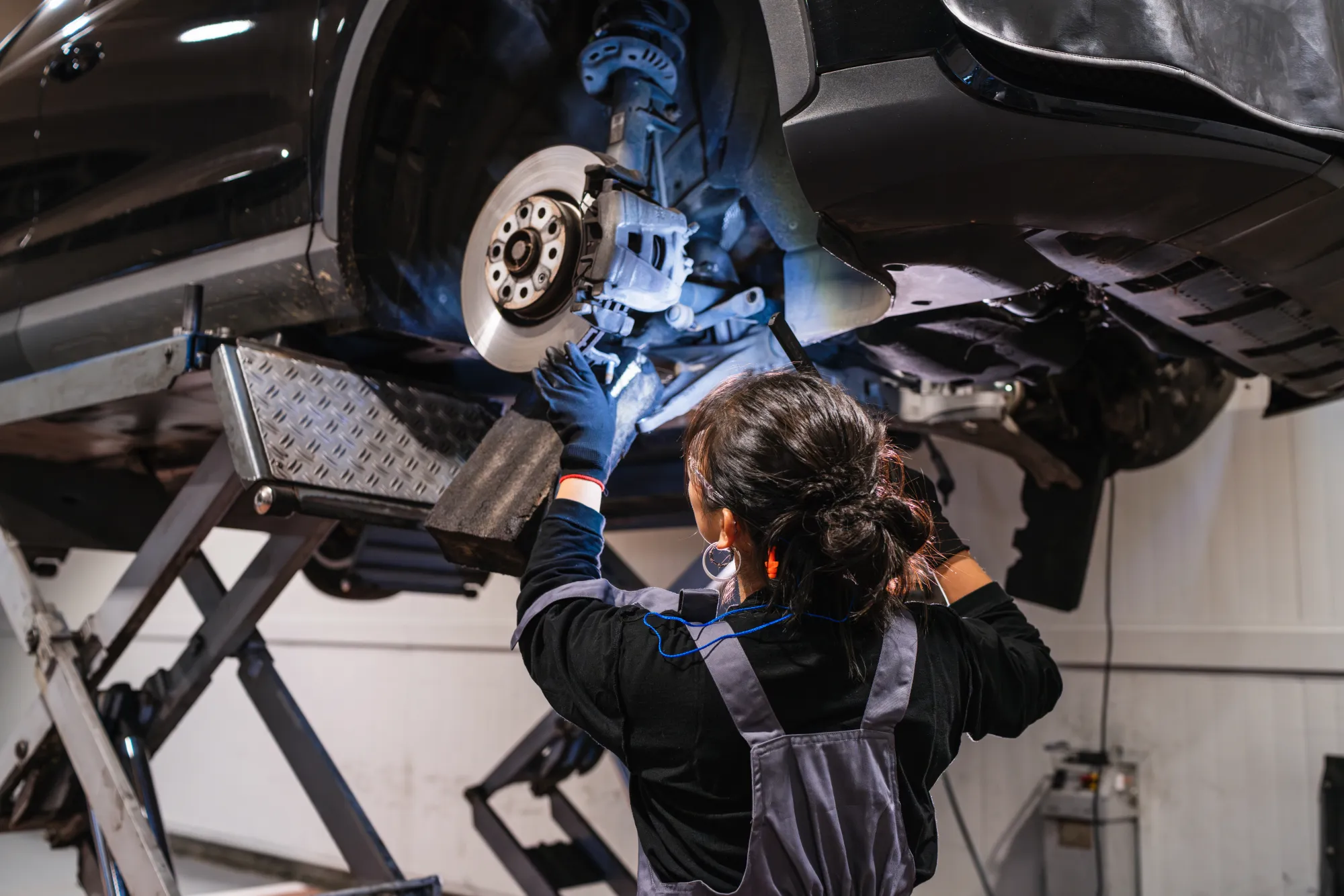
The other caliper should get more than a glance at its exterior. Raybestos says inspection before caliper reuse includes checking for leakage, damaged boots and proper piston operation. A caliper that looks acceptable from outside still needs an operating check. Raybestos’ caliper reuse bulletin
The inspection should establish:
- Whether the caliper leaks. Identify the leak’s actual location before deciding which component needs repair.
- Whether the piston operates correctly. Binding or failure to release requires diagnosis.
- Whether boots are intact. Tears and other damage need assessment before reuse.
- Whether slides move freely, where fitted. Seized hardware can affect operation even when the caliper itself is serviceable.
- Whether pads move correctly in their bracket. Binding here can contribute to uneven wear.
Wagner’s inspection checklist distinguishes external hardware problems from internal caliper problems. That distinction matters when deciding whether the opposite side needs a replacement assembly or attention to its slides and pad supports. Wagner’s brake inspection checklist
For example, a confirmed internal fault on one side, with the opposite assembly passing inspection, supports considering individual replacement if vehicle guidance permits it. If both pistons bind, the findings support work on both sides. The findings determine which example fits the vehicle.
There is also a middle possibility: the opposite side needs hardware service but passes the checks for caliper reuse. In that case, ask the technician to describe the hardware fault separately from the failed caliper on the other wheel. “Both sides need work” and “both calipers need replacement” can describe different repair plans.
Could a brake hose be causing the apparent caliper problem?
A brake that does not release can have more than one cause. Raybestos explains that a restricted flexible hose can interfere with fluid flow and that frozen pistons or slides can also produce uneven pad wear. Its hose inspection guidance includes cracks, ballooning, chafing, seepage and separation at fittings. Raybestos’ hose restriction bulletin
That is why the inspection needs to include hoses on the affected axle. Looking at the rubber exterior is only part of diagnosing a possible restriction.
The technician should distinguish a hydraulic restriction from mechanical binding using the vehicle’s diagnostic procedure. If a restricted hose is responsible, replacing a caliper alone would leave that restriction unresolved.
A hose fault on one wheel does not establish that both calipers have failed. Any separate caliper defect found during inspection still needs attention.
What about the pads and rotors?
The number of replacement calipers and the scope of pad or rotor work are separate decisions. Both sides need evaluation, even when only one caliper has a confirmed fault.
For pads, the inspection should compare inner and outer wear and assess remaining material against the vehicle’s specifications. For rotors, it should assess condition and wear against the applicable service limits. Uneven wear is a reason to investigate the cause before choosing the repair.
Wagner specifically calls for examining rotors for excessive wear or rust and checking hardware areas where corrosion can make pads bind. Those findings help explain why the estimate may include more than a caliper.
The shop’s guide to signs you need brake pad replacement explains related symptoms. Symptoms can prompt an inspection; they do not determine how many calipers need replacing.
If pads or rotors need replacement, the technician should explain the required scope across the axle under the applicable service guidance. Keeping a serviceable caliper does not automatically mean keeping every associated friction component.
What should the brake caliper replacement recommendation explain?
When manufacturer guidance is cited, ask which instruction applies to your vehicle and how it changes the proposed repair. A general recommendation from a parts manufacturer and a vehicle-specific service instruction should be identified separately. This helps you understand whether the recommendation follows an inspection finding, an applicable procedure, or a preventive choice.
Before approving the repair, ask for the findings behind its scope:
- What confirmed the failed caliper rather than a hose or slide problem?
- What did inspection of the opposite caliper show?
- Which pads, rotors, hoses or hardware also need attention, and why?
- Does the vehicle manufacturer’s procedure affect individual versus pair replacement?
- Is the second caliper required to correct a defect, or recommended preventively?
The procedure matters after parts selection too. Wagner specifies bleeding air after caliper replacement. The repair should follow the vehicle’s applicable service instructions rather than treating installation of the part as the whole job.
An estimate for one caliper can be reasonable, and an estimate for both can be reasonable. The explanation should connect each recommended part to a documented condition or applicable manufacturer guidance.