Watch traffic on 127th Street in Lemont during an afternoon downpour and you will see it: a line of cars with the wipers slapping away and not a single light showing at the back. Those drivers are not careless. Most believe their car handles its own lights, and have no idea Illinois already told them what to do.
The rule is short, and it has nothing to do with the time of day. If the weather has your wipers running, your headlights belong on. Here is what the law actually says, why the daytime running lights on the front of your car do not satisfy it, and how to tell in about thirty seconds whether the back of your vehicle is lit or dark.
What the Illinois Headlight Wiper Law Actually Says
The section that governs this is 625 ILCS 5/12-201. Subsection (b) requires every motor vehicle other than a motorcycle to show at least two lighted head lamps, and it names three separate situations where they are required:
- During the period from sunset to sunrise.
- At times when rain, snow, fog, or other atmospheric conditions require the use of windshield wipers.
- At any other time when, because of insufficient light or unfavorable atmospheric conditions, people and vehicles on the highway are not clearly discernible at a distance of 1,000 feet.
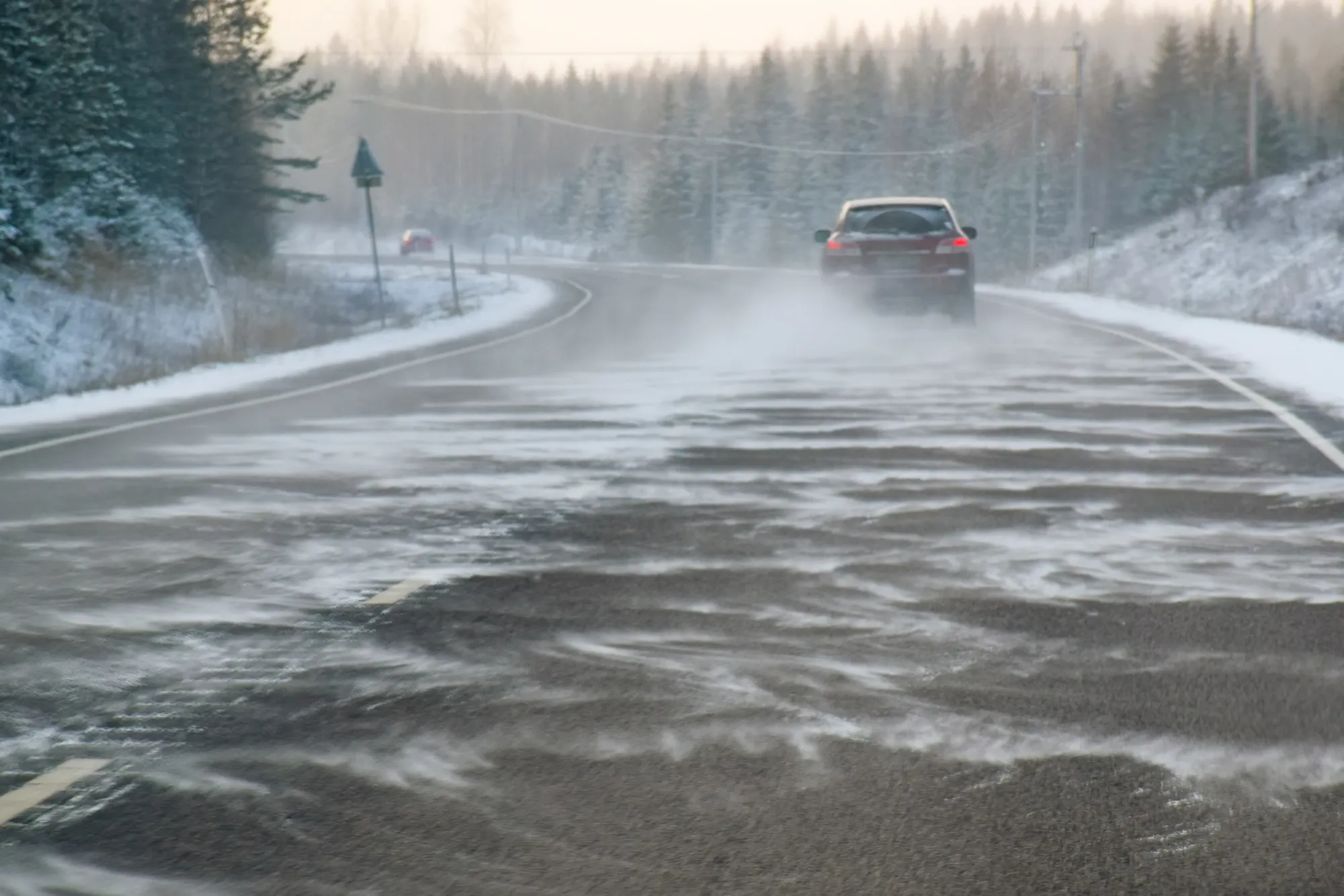
Read that middle trigger again, because it is the one almost nobody knows. It does not say “at night when it rains.” It says whenever the weather has the wipers going. Two o’clock on a bright, wet Tuesday in September counts. So does a quick squall on Archer Avenue, blowing snow on the way in from Homer Glen or Lockport, and the kind of thick river-valley fog that has you slowing to a crawl.
The 1,000-foot rule is its own independent test. A thousand feet is roughly three football fields, and if you cannot pick out a person or a car at that range, the law wants your lights on whether or not a drop of rain has fallen.
That is the whole Illinois headlight wiper law in plain language. What trips people up is not the rule. It is the assumption that their vehicle is already obeying it. It is the same pattern we see with Illinois emissions testing: a rule that is simple once you read it and widely misunderstood until you do.
Parking Lamps Don’t Count, and Neither Do Daytime Running Lights
Two things get mistaken for headlights. The statute settles one of them outright. Federal equipment rules explain the other.
Parking lamps. That first click of the headlight switch, the one that lights the tail lamps and the plate light but leaves the headlamps off, is not a substitute. The same subsection of the Illinois code says parking lamps “may be used in addition to but not in lieu of such head lamps.” In addition to. Not instead of. If you have been riding out rainstorms on the first click because it looks like something is on, you are not meeting the requirement.
Daytime running lights. These are the ones that fool good drivers, because they genuinely do something. Under the federal lighting standard, FMVSS 108, any pair of lamps on the front of a car, van, truck, or bus, other than the parking lamps or fog lamps, may be wired to come on automatically as daytime running lamps. Note the word may. Daytime running lamps are a permitted feature, not a required one.
Here is the part that matters: the standard describes lamps on the front of the vehicle. It does not require your tail lamps to come on with them, and on a great many vehicles they do not. Your daytime running lights make you conspicuous to oncoming traffic and to the car waiting to pull out of a side street, and they do absolutely nothing for the driver behind you.
Why the Back of Your Car Is the Real Problem in Rain
Illinois does not stop at the front of the vehicle. The same section requires at least two lighted tail lamps throwing a red light visible for at least 500 feet in the reverse direction, and it requires the rear plate to be lit with white light and legible from 50 feet to the rear.
Now picture the ordinary version of this. You are heading east on 127th Street in a steady rain, wipers on intermittent, switch in OFF. Your daytime running lights are on, so the view through your own windshield looks perfectly normal. Behind you, a driver is looking through a smeared windshield, through the spray your tires are throwing, at a dark gray car with two unlit tail lamps and an unlit plate. Nothing about your vehicle stands out from the wet pavement until they are close.
The conditions the Illinois rule names are the conditions where being seen from behind matters most, which is exactly why it names them.
There is a related version, common on merges like the one onto Archer Avenue: a car with one burned-out tail lamp. A single point of red light at distance in mist does not read as a full-width car. It can look like a motorcycle, or like a vehicle farther away than it is.
How to Tell Whether Your Car Switches Over Automatically
Plenty of drivers set the switch to AUTO and stop thinking about it. That is reasonable, right up until you learn what AUTO is actually watching.
Manufacturer documentation is clear on the mechanism. Mazda, for one, explains that with the switch in AUTO and the ignition on, a light sensor senses the surrounding lightness or darkness and turns the headlights and other exterior lights on or off accordingly. The trigger is ambient light level. It is not the wipers.
That distinction is the whole issue for a rainy afternoon. A daytime rainstorm can be genuinely bright, and wet pavement bounces light around, so a system judging brightness may leave your headlamps off while your wipers work at full speed. AUTO is not wrong, exactly. It is answering a different question than the one Illinois asks.
So check it yourself, and do not use the dashboard to do it. On most vehicles the instrument panel lights up whenever the ignition is on, so an illuminated dash proves nothing about the lamps outside. Instead:
- Find the telltale. Look for the headlamp indicator on the cluster, the little symbol with the lines coming off it. That symbol, not the general dash glow, is what tells you the headlamps are lit.
- Learn your switch by feel. Know where the parking-lamp click stop is and how far past it the headlamp position sits, so you can move it in traffic without looking down.
- Use a reflection. Pull up facing a garage door or a storefront window and cycle the switch. You will see exactly which lamps each position lights.
- Walk around it once. With the vehicle safely parked and the ignition on, look at the front and the back in each switch position. Ten seconds in your driveway settles it permanently.
- Then make it a habit. When the wipers go on, move the switch to headlights. Do not delegate a legal requirement to a light sensor.
Manufacturer documentation also confirms why the first click is a trap: in the parking position, the tail lights and plate light come on while the headlights stay off. They are separate circuits, so it looks like progress without being the position the statute asks for.
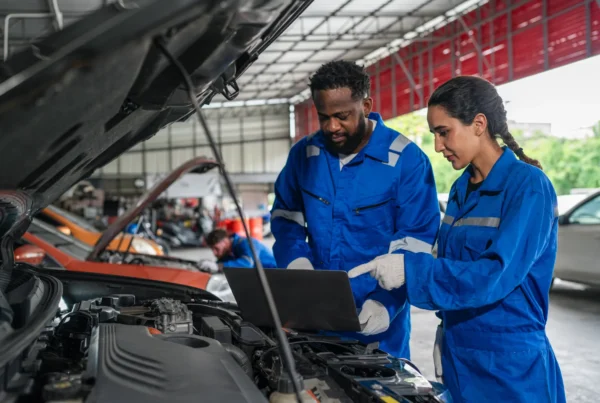
Headlight Replacement and Brake Light Repair: What Our Lemont Shop Checks
Switching the lights on only helps if the lamps still work and still project where they should. That is the part people put off longest, because a dim lamp fails so gradually you never notice a bad day.
Lens condition is the most underrated item on the list. AAA research released in December 2018 found that clouded or yellowed headlights produce only 20 percent of the light that new ones do. The lamps tested were roughly 11 years old, an ordinary age for a vehicle on the roads around Lemont and Lockport. Restoring the lenses brought output back to about 70 percent, while replacing the assemblies with aftermarket parts restored 83 to 90 percent. AAA also notes that half of all crashes happen at night. A lamp that switches on is not the same thing as a lamp that works.
When you bring a vehicle to us for lighting concerns, here is the ground we cover:
- Bulbs, one lamp at a time. Low beams, high beams, tail lamps, plate lights, and turn signals, including the ones you cannot see from the driver’s seat. Bulbs that have gone dim rather than dark get flagged too.
- Lens haze. How far gone the plastic is, and whether restoration or headlight replacement in Lemont, IL is the honest answer for your vehicle. We will tell you which one we would do.
- Aim. A pothole hit, a curb strike, or front-end work can knock a headlamp out of alignment, and a misaimed lamp both blinds oncoming traffic and puts your own light in the wrong place. If you have wondered whether a rough stretch of road did more than rattle you, our post on 5 ways potholes can damage your car covers the rest of the damage list.
- Sockets, grounds, and connectors. Corrosion and moisture cause flicker and lamps that work only sometimes. This is where most “I replaced the bulb and it still does not work” cases land.
- Brake lamps, properly tested. Illinois requires stop lamps at the rear that show a red or amber light visible from at least 500 feet to the rear in normal sunlight, actuated by the foot brake. You cannot verify your own brake lights alone. Backing toward a garage door to catch the red glow is better than nothing, but it does not tell you whether all of them fire at full brightness. Brake light repair in Lemont, IL is a fast check for us because we have someone on the pedal and someone at the back with eyes on all three lamps. While we are back there we look at the brakes themselves, and our list of signs you need brake pad replacement covers what to listen and feel for between visits.
- Trailer wiring and add-ons. Work vans and pickups with a trailer plug or an aftermarket brake controller have extra connections to corrode. A bad ground there can dim or flicker the brake lamps on the vehicle itself. If you run a small fleet, our fleet vehicle service program folds this into scheduled maintenance so it is caught before a driver gets pulled over.
What any of this takes depends on your specific vehicle, which assemblies are involved, and what parts are available for it, so we do not publish figures. Contact Pepper’s Lemont Auto Care for a current quote on your vehicle before any work starts.
A Simple Rain-Season Routine for Lemont, IL Drivers
Fall and winter here mean wet pavement, early sunsets, and fog off the Des Plaines River valley. A few habits cover almost all of it.
When the wipers go on, turn the headlights on. Not AUTO, not the first click. All the way on. It satisfies the statute and it lights the back of your car for the driver you cannot see.
Have every exterior lamp checked as the wet season starts, rather than finding out at a traffic stop or in a crash report. That includes the tail lamps, the plate light, and all of the brake lamps.
And when something looks off, get it looked at while it is still small. A single dim tail lamp is a quick fix, and it is easier to handle now than on a rainy evening.
Get Your Lights Checked at Pepper’s Lemont Auto Care
Family-run in Lemont since 1990, we have been keeping cars, trucks, and work vans visible on these roads a long time. A burned-out bulb, hazed lenses that need headlight replacement in Lemont, IL, an aim adjustment after a pothole, brake light repair in Lemont, IL that needs a second set of eyes: bring it in and we will inspect every lamp, then tell you plainly what needs attention.
If you have been searching for a lighting shop near you, we are at 16191 W 127th Street, serving Lemont, Homer Glen, Lockport, Darien, Woodridge, Romeoville, Orland Park, and the surrounding southwest suburbs. Request a quote and we will get you scheduled before the next storm rolls through.